
Definition:
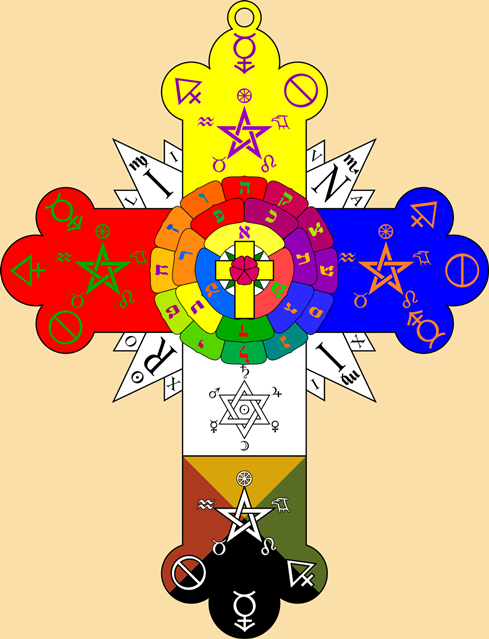
The “Rose Cross” is a symbolic emblem consisting of a cross with a rose at its center. It represents the union of opposites, most commonly spirit and matter, and serves as a visual synthesis of metaphysical, psychological, and cosmological ideas.
It is used in various esoteric traditions as a symbolic map of reality, consciousness, and transformation.
Etymology:
The term “Rose Cross” combines two long-standing symbolic elements. The rose has traditionally been associated with unfolding, inner development, and hidden knowledge, often linked to the idea of something gradually revealing itself. The cross, by contrast, represents structure, intersection, and the organization of space or reality. When combined, the two form a symbolic expression of something living and dynamic unfolding within a fixed structure. In this sense, the name itself reflects the central idea of the symbol: the development of consciousness within the framework of the material world.
Description:
The symbol is composed of two primary elements:
- The Cross: represents structure, matter, and the physical world. It can also be understood as the framework through which reality is organized.
- The Rose (center): represents consciousness, the soul, or the process of unfolding awareness.
Together, they symbolize:
- The union of spirit and matter.
- The relationship between inner and outer reality.
- The connection between microcosm (human) and macrocosm (universe).
In more developed systems, the Rose Cross is treated as a symbolic model of reality, where:
- Letters function as units of meaning.
- Paths represent relationships or transformations between states.
This reflects a worldview in which symbols are not arbitrary, but structurally related to reality itself.
When Kabbalah presents the Rose Cross as a symbol of the structure of reality, what is meant, in an occult sense, is the structure of language. The symbol does not describe physical reality directly, but the underlying structure of language through which reality is described and understood.
In symbolic systems, when one traces symbols back to their source, they ultimately refer to other symbols, and at the deepest level, all symbols symbolize each other. Meaning is generated through these relationships rather than through isolated definitions.
The Rose Cross is a representation of this structure, a hierarchical system in which all symbols are derived from, and interconnected within, a unified framework of meaning.
Kabbalah is historically a Jewish mystical tradition that developed within Judaism, especially in medieval Europe. It is based on Jewish religious texts and ideas, such as the Hebrew Bible, the ten sefirot, and the symbolic meaning of the Hebrew alphabet.
The Rose Cross used by the Hermetic Order of the Golden Dawn, however, does not belong to this Jewish tradition. Although the Golden Dawn borrowed concepts from Kabbalah, they combined them with many other systems, including astrology, alchemy, Tarot, and various forms of Western occult philosophy.
For that reason, the Golden Dawn Rose Cross should not be understood as a symbol of Jewish Kabbalah itself. However, it clearly draws heavily on Kabbalistic concepts, especially the symbolic use of the Hebrew alphabet and the structure associated with the Tree of Life. Rather than belonging to the Jewish tradition, the Rose Cross is part of a later Western esoteric system that adopted and reinterpreted Kabbalistic ideas alongside many other symbolic traditions such as astrology, alchemy, and Tarot.
Articles:
Illuminati

Definition: “Illuminati” refers to individuals who understand how language, religion, and the world system are scams. Etymology: The term “Illuminati” originates from Latin and means “the enlightened.” It is derived…
Language
Definition: “Language” is a structured collection of patterns associated with ideas. Language is the tool of communication. Etymology: The word “language” comes from the Old French word “langage,” which originally…
Passion of Christ
Definition: The “Passion of Christ” is a fictional story that refers to the final period of Jesus Christ’s life, encompassing his suffering, crucifixion, and death. This period is central to…
Seal of Solomon
Definition: The “Seal of Solomon,” also known as the “Ring of Solomon,” is a symbolic emblem attributed to King Solomon, a wise and powerful monarch in Jewish, Christian, and Islamic…
Symbolism
Definition: A “symbol” is a pattern with an association. Etymology: The word “symbol” traces its origins back to the Greek word “symbolon,” which referred to a token or sign of…
The Tree of Life
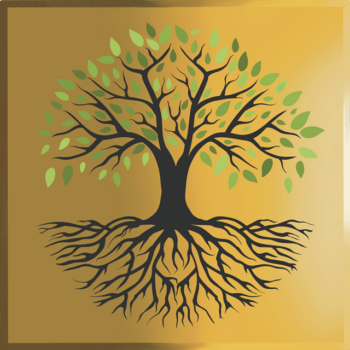
Definition: “The Tree of Life” is a fictional concept and typically refers to a symbolic tree in various religions. Etymology: The term “Tree of Life” comes from the concept of…
The Tree of the Knowledge of Good and Evil
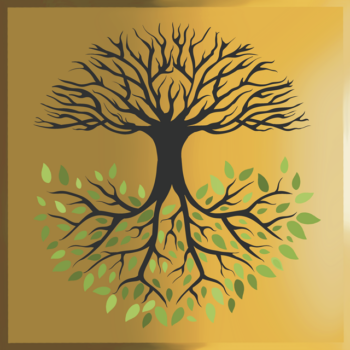
Peter Paul Rubens – The Fall of Man (1628-1629). Charles Joseph Natoire – The Rebuke of Adam and Eve (1740). Definition: “The Tree of the Knowledge of Good and Evil,”…
The World Tree
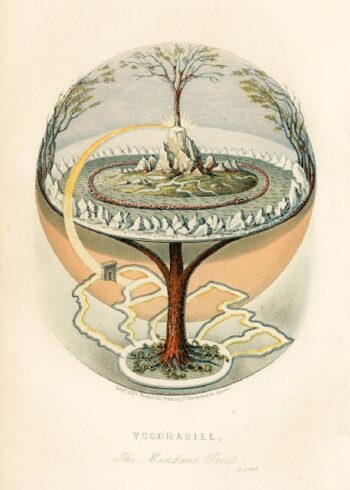
Oluf Olufsen Bagge – Yggdrasil, The Mundane Tree (1847). “The World Tree” is illustrated as a massive tree holding up the world with its three branches. The world is inside…
Tower of Babel
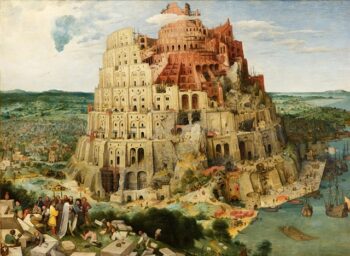
Pieter Bruegel the Elder: The Tower of Babel (1563). Lucas van Valckenborch: Tower of Babel (1594). Gustave Doré: The Confusion of Tongues. Definition: The “Tower of Babel,” also known as…
Web of Language
Description: Religion works like a network in the brain. At the center of the web is the concept of God’s existence. In every cross of the web around the word…
Symbolism:
At its most general level, the Rose Cross represents integration:
- Consciousness within structure.
- Unity emerging from multiplicity.
- Transformation through interaction.
The rose unfolds within the cross, suggesting that awareness develops within constraints. This is an idea intended to imprison the believer in fantasy.
The Rose:
In the system developed by the Hermetic Order of the Golden Dawn, the rose is composed of 22 petals, each corresponding to:
- The 22 letters of the Hebrew alphabet.
- The 22 paths on the Tree of Life.
- 22 archetypal processes or transformations.
The petals are arranged in layers:
- Inner petals → fundamental forces (often linked to elements).
- Outer petals → more differentiated expressions.
Each petal is associated with:
- A specific color (from structured “color scales”).
- A letter and a corresponding path.
The rose thus functions as a symbolic map of transformation and cognition.
The Cross:
The cross represents structure and embodiment:
- Spatial orientation (up/down, left/right).
- The intersection of dimensions.
- The fixed framework within which change occurs.
It provides the stable axis around which the rose (transformation) unfolds.
The Tree of Life:
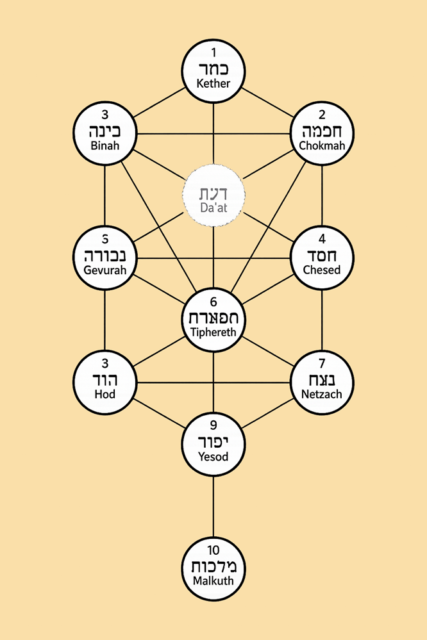
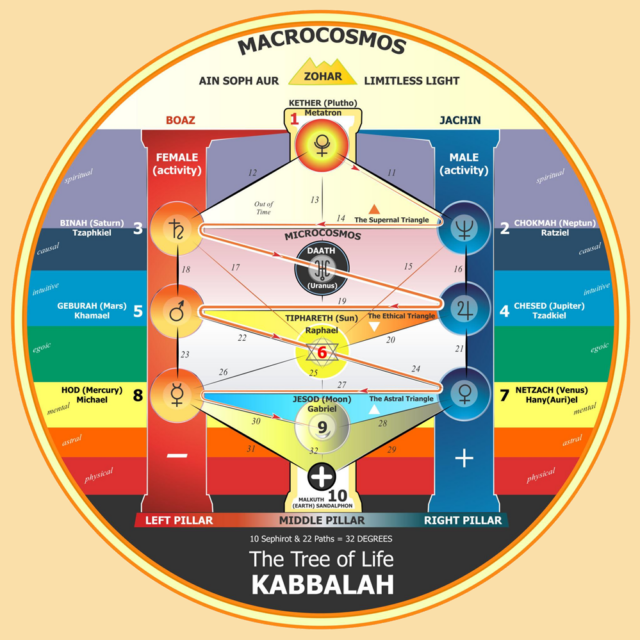
Within Kabbalistic symbolism:
- There are 10 Sephiroth (nodes or states of being).
- There are 22 paths (connections between those states).
This creates a structured system of 32 components:
- 10 states.
- 22 transitions.
Conceptually:
- Nodes = states of reality.
- Paths = transformations between states.
The Rose Cross encodes this structure symbolically, especially in later esoteric systems.
The Exact Golden Dawn Path Assignments:
| Path # | Letter | Tarot |
|---|---|---|
| 11 | א (Aleph) | Fool |
| 12 | ב (Beth) | Magician |
| 13 | ג (Gimel) | High Priestess |
| 14 | ד (Daleth) | Empress |
| 15 | ה (Heh) | Emperor |
| 16 | ו (Vav) | Hierophant |
| 17 | ז (Zayin) | Lovers |
| 18 | ח (Cheth) | Chariot |
| 19 | ט (Teth) | Strength |
| 20 | י (Yod) | Hermit |
| 21 | כ (Kaph) | Wheel of Fortune |
| 22 | ל (Lamed) | Justice |
| 23 | מ (Mem) | Hanged Man |
| 24 | נ (Nun) | Death |
| 25 | ס (Samekh) | Temperance |
| 26 | ע (Ayin) | Devil |
| 27 | פ (Peh) | Tower |
| 28 | צ (Tzaddi) | Star |
| 29 | ק (Qoph) | Moon |
| 30 | ר (Resh) | Sun |
| 31 | ש (Shin) | Judgement |
| 32 | ת (Tav) | World |
The Hebrew Alphabet:
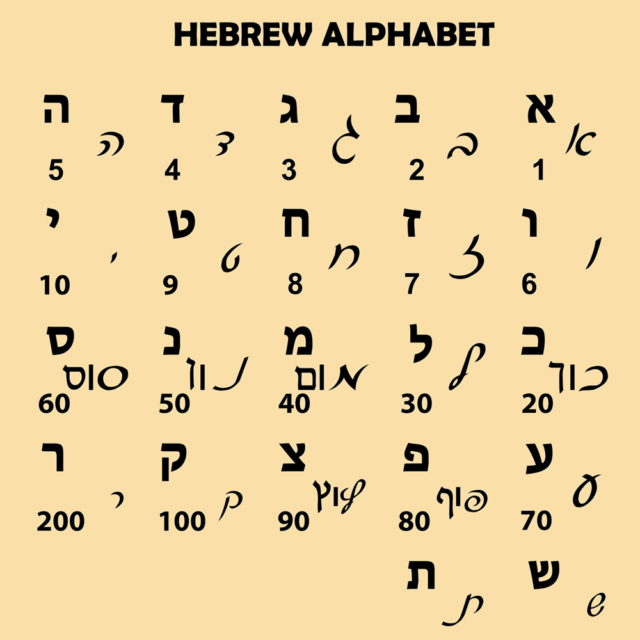
The Hebrew alphabet consists of 22 letters, which in Kabbalistic thought are not merely linguistic symbols, but fundamental building blocks of reality.
This idea is expressed in texts such as the “Sefer Yetzirah”, where creation is described as occurring through letters.
The letters are traditionally divided into three groups:
- 3 mother letters:
- א (Aleph) → Air.
- מ (Mem) → Water.
- ש (Shin) → Fire.
(These represent fundamental forces; Earth is understood as the resulting material manifestation rather than a primary element.)
- 7 double letters:
- Associated with planets.
- Represent dual qualities (e.g. life/death, peace/war).
- 12 simple letters:
- Associated with zodiac signs.
- Represent structured patterns of experience.
This creates a system:
- 3 elements.
- 7 planetary forces.
- 12 zodiac patterns.
(3 + 7 + 12 = 22 total symbolic units.)
The numbers 3, 7, and 12 are not necessarily tied to creation itself, but they are strongly tied, symbolically, to the structure of reality, which is also what the deeper symbolic patterns in the biblical creation story of Genesis seem to point to.
The number 3 is often symbolically associated with God (for example, the Trinity in Christianity), which also links it to the biblical creation story, since theism claims that God existed before time. The number 7, symbolically associated with the seven classical planets — the Sun, Moon, Mars, Mercury, Jupiter, Venus, and Saturn — became tied to the seven days of the week, and is therefore also linked to time. The number 7 appears in the biblical creation myth, where God created the world in six days and rested on the seventh. The number 12 is symbolically associated with the twelve zodiac signs, which correspond to the twelve months and are therefore also linked to time. In Christianity, the number 12 is also associated with the twelve Apostles.
Golden Dawn Correspondences of the 22 Hebrew Letters:
| # | Letter | Name | Tarot | Association | Meaning | Symbol |
|---|---|---|---|---|---|---|
| 1 | א | Aleph | The Fool | Element: Air | Breath, potential, pure consciousness | Beginning, zero, undifferentiated awareness |
| 2 | ב | Beth | The Magician | Mercury | House, container | Language, communication, manifestation |
| 3 | ג | Gimel | The High Priestess | Moon | Camel (that crosses the desert) | Bridge, intuition, hidden knowledge |
| 4 | ד | Daleth | The Empress | Venus | Door | Entry into form, creation, fertility |
| 5 | ה | Heh | The Emperor | Aries | Window / breath | Authority, structure, perception |
| 6 | ו | Vav | The Hierophant | Taurus | Nail / hook (connector) | Binding, tradition, systemization |
| 7 | ז | Zayin | The Lovers | Gemini | Sword | Division, choice, duality |
| 8 | ח | Cheth | The Chariot | Cancer | Fence / enclosure | Control, direction, containment |
| 9 | ט | Teth | Strength | Leo | Serpent | Raw force, instinct, inner power |
| 10 | י | Yod | The Hermit | Virgo | Hand / point | Focus, individuation, seed |
| 11 | כ | Kaph | Wheel of Fortune | Jupiter | Palm / open hand | Expansion, cycles, fate |
| 12 | ל | Lamed | Justice | Libra | Goad (tool to guide animals) | Balance, adjustment, correction |
| 13 | מ | Mem | The Hanged Man | Element: Water | Water | Suspension, inversion, surrender |
| 14 | נ | Nun | Death | Scorpio | Fish | Transformation, continuation through change |
| 15 | ס | Samekh | Temperance (Art) | Sagittarius | Support / prop | Integration, flow, synthesis |
| 16 | ע | Ayin | The Devil | Capricorn | Eye | Perception, illusion, material fixation |
| 17 | פ | Peh | The Tower | Mars | Mouth | Expression, destruction, sudden truth |
| 18 | צ | Tzaddi | The Star | Aquarius | Fishhook | Guidance, drawing down insight |
| 19 | ק | Qoph | The Moon | Pisces | Back of the head | Dreams, subconscious, distortion |
| 20 | ר | Resh | The Sun | Sun | Head | Awareness, illumination, identity |
| 21 | ש | Shin | Judgement | Element: Fire | Tooth | Transformation through fire, awakening |
| 22 | ת | Tav | The World | Saturn | Mark / cross | Completion, structure, totality |
Correspondence Systems:
In later esoteric traditions, especially the Hermetic Order of the Golden Dawn, the 22 letters were mapped onto additional systems:
- Tarot (22 Major Arcana).
- Astrology (planets and zodiac signs).
These correspondences are not part of traditional Kabbalah, but later interpretive overlays.
Articles:
A
Definition: The letter “A” is the first letter of many alphabets, including but not limited to the modern English alphabet. Etymology: The symbol for the letter “A” originates from the…
Celtic Cross
Definition: The “Celtic cross” is a form of Christian cross featuring a traditional cross with a nimbus or ring surrounding the intersection. It is distinct for its combination of a…
Chi Rho
Definition: “Chi Rho” is one of the earliest forms of christogram, formed by superimposing the first two Greek letters of the word “ΧΡΙΣΤΟΣ” (Christos)—chi (Χ) and rho (Ρ). It serves…
Christian Cross
Definition: The “Christian cross,” also known as the “Latin cross,” is a symbol of Christianity, representing the crucifixion of Jesus Christ and His resurrection. Etymology: The word “cross” comes from…
Crucifix
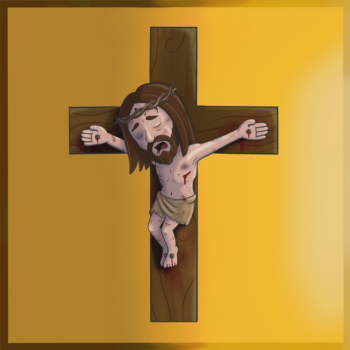
Definition: A “crucifix” is a cross that bears the representation of Jesus Christ’s body, known as the corpus. Etymology: The word “crucifix” comes from the Latin “crucifixus,” meaning “one fixed…
Greek Cross
Definition: The “Greek Cross” is a type of cross with four arms of equal length, intersecting at right angles. Etymology: The term “Greek Cross” originates from its prominent use in…
Jerusalem Cross
Definition: The “Jerusalem Cross,” also known as the “Crusader’s Cross,” is a Christian symbol consisting of a large cross potent (a cross with crossbars at the ends) surrounded by four…
One (1)
Definition: The number “1” is the first and smallest natural number. It represents a unit, a single entity, or a quantity of one. In arithmetic, 1 serves as the multiplicative…
Orthodox Cross
Definition: The “Orthodox cross,” often referred to as the “Russian Orthodox cross,” is a distinct Christian cross associated particularly with the Eastern Orthodox Church. Etymology: The term “Orthodox” comes from…
Papal Ferula
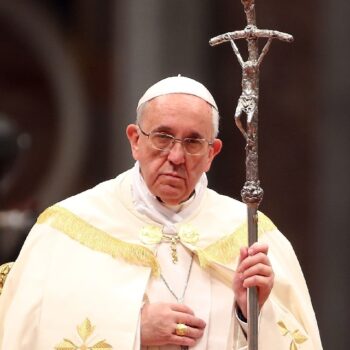
Definition: A “papal ferula” is a ceremonial staff carried by the Pope. Etymology: The term “ferula” comes from the Latin word “ferula,” meaning “rod” or “staff.” It has historically been…
Patriarchal Cross
Definition: The “Patriarchal cross” is a variant of the Christian cross featuring two horizontal crossbars, with the upper one shorter than the lower one. Etymology: The term “patriarchal” comes from…
Pattée Cross
Definition: The “Pattée cross” (also spelled “Pattee”, “Patee”, or “Paty”) is a distinct form of Christian cross with arms that are narrow at the center and flare out in a…
Santa Hat
Definition: A “Santa hat” is a festive piece of headwear typically worn during the Christmas season. Etymology: The term “Santa hat” is derived from “Santa Claus,” the popular figure associated…
Southern Cross

Definition: The “Southern Cross” refers to a prominent constellation officially known as “Crux.” It is visible in the southern hemisphere and is composed of five stars that form a cross-like…
Spiderweb
Definition: A “spiderweb” (or “cobweb”) are networks of thin threads of silk spun by spiders to capture prey. Etymology: The word “spiderweb” comes from the Old English “spider” and “web,”…
St. John’s Bonfire
Definition: The “St. John’s Bonfire,” also known as “St. John’s Eve Bonfire” or “Midsummer Bonfire,” is a large bonfire traditionally lit on the evening of June 23rd, the eve of…
Star of David
Definition: The “Star of David,” also known as the “Magen David” (Shield of David), is a hexagram or six-pointed star formed by two interlocking triangles. It is a prominent symbol…
Sword
Definition: A “sword” is a bladed weapon used primarily for cutting or thrusting. Typically, it consists of a long metal blade attached to a hilt with a guard. Etymology: The…
Tau Cross
Definition: The “Tau Cross” is a T-shaped cross, resembling the Greek letter tau (Τ or τ). Etymology: The term “Tau” derives from the Greek letter “ταῦ” (tau), which was used…
Three (3)
Definition: The number “3” is the third natural number following “2” and preceding “4.” It represents a quantity of three units or objects. Etymology: The etymology of the number “3”…
Time
Definition: “Time” is a continuous, irreversible progression through which events occur from the past, through the present, and into the future. It is a fundamental concept in physics and human…
Tower Cake
Definition: A “kransekake,” meaning “wreath cake”, also known as a “tower cake,” is a Danish and Norwegian traditional cake made of almonds, sugar, and egg whites. Etymology: The term “tower…
Trefoil Cross
Definition: The “Trefoil cross” is a symbol that combines the traditional Latin cross shape with three rounded lobes at the end of each arm, creating a design that resembles a…
Volcano
Definition: A “volcano” is a geological formation, typically a mountain, where molten rock (magma), ash, and gases from the Earth’s interior erupt through the Earth’s crust. Etymology: The word “volcano”…
Wedding Cake
Definition: A “wedding cake” is a special cake served at a wedding reception following the wedding ceremony. It is often multi-tiered, elaborately decorated, and designed to reflect the couple’s tastes…
White Nationalist Celtic Cross
Definition: The term “White Nationalist Celtic cross” refers to a specific adaptation of the traditional Celtic cross that has been appropriated by white nationalist and white supremacist groups. Etymology: The…
Witch’s Hat
Definition: A “witch’s hat” is a hat worn by a witch. It’s typically a tall pointed, cone-shaped black hat with a wide brim. Etymology: The term “witch” comes from the…
Wizard’s Hat
Definition: A “wizard’s hat” is a hat worn by a wizard. It’s typically a tall pointed, cone-shaped hat with a wide brim, adorned with stars, moons, or other mystical symbols….
Religion:
The Rose Cross is most strongly associated with Rosicrucianism, a mystical movement that emerged in Europe in the early 17th century.
It was later developed and systematized by esoteric groups such as:
- The Hermetic Order of the Golden Dawn.
- Figures like Samuel Liddell MacGregor Mathers.
In these traditions, the symbol became highly complex, incorporating:
- Kabbalistic structures.
- Astrological correspondences.
- Tarot symbolism.
- Color systems.
The Golden Dawn version is not a single fixed symbol, but a layered system encoding multiple symbolic relationships.